
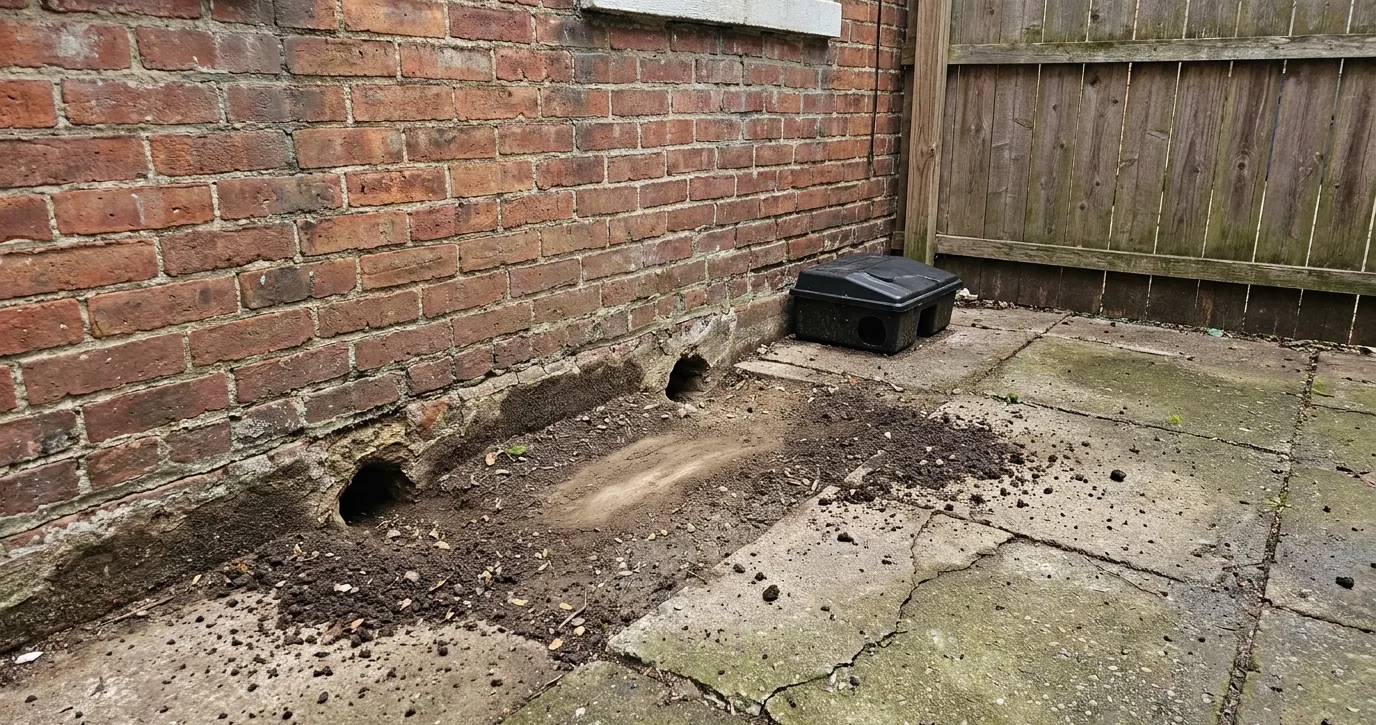
Why the rats here behave the way they do
Every rat we deal with in this city is a Norway rat. They dig, they swim, and they prefer to stay low — in burrows under paving and planting beds, along foundation walls, and inside the brick sewer connections that run out from older buildings to the street. Roof rats, the climbing species common further south, are not part of the Hoboken picture.
That habit shapes the whole job. A rat problem in a brownstone is almost always a ground-floor and below-grade problem first: the cellar, the garden-level apartment, the rear yard and the space under the front stoop. Treating the top-floor kitchen because that is where the noise was heard rarely touches the source.
Rats also keep to routine. They use the same paths night after night, which is what makes a well-placed trap work and what lets us read a building from the smears, droppings and gnawing they leave along the way. A trained eye can usually tell within one visit whether a group is small and new or settled in.
Signs it is rats and not mice
- Droppings roughly the size of a raisin or larger, blunt at the ends, often in a line along a wall.
- Fresh burrow openings, about the width of a fist, in yard soil, under pavers or beside a foundation.
- Dark greasy rub marks at the bottom of walls and around pipe holes where bodies brush past every night.
- Chewed garbage bags at the curb or in the trash enclosure, with the damage at the bottom rather than the top.
- Heavier thumps or scrabbling in a basement ceiling, as opposed to the light skittering mice make inside walls.
If what you are finding is small and pointed, it is likely mice, and that calls for a different approach — our mouse control page explains how that work differs.
How a rat job runs
Trace the runs
We follow the evidence from where it was seen back to where it starts: burrows, sewer cleanouts, gaps around service lines and the base of shared walls.
Remove the rats inside
Traps go on the runs we found, set and checked on a schedule. Anything placed outdoors goes in locked, tamper-resistant stations.
Close the way in
Openings get packed and capped with metal and masonry, because a rat chews through foam, wood and plastic without much effort.
Come back and confirm
Follow-up visits check traps, look for new rub marks and confirm the old burrows have stayed collapsed.
That order matters. At Hoboken Rodent Control we do not seal a building while rats are still living inside it, because a sealed-in rat chews a new exit, often somewhere worse. The full sequence is laid out on our how it works page.
Yards, trash and the sewer line
Most rear yards in town are small, fenced and shared by several units, which means one tenant's habits can feed the whole lot. Dog waste, bird feeders, compost and bags left out the night before collection are the usual draws. Part of every rat visit is walking the yard with whoever manages the building and pointing out what is keeping the colony fed.
Below ground, older buildings connect to a combined sewer, and a cracked lateral or an uncapped cleanout gives rats a direct path into the cellar. Heavy rain makes this worse in the low blocks on the west side, which our Southwest Hoboken page covers in more detail.
Construction and renovation stir them up
Work on a street, a sewer repair or a gut renovation next door often sends rats looking for a new home. Digging collapses burrows and noise drives them out of spaces they have used for years. If rats appear suddenly in a building that never had them, it is worth asking what has changed nearby.
In that situation the fastest fix is usually defensive: close the cellar openings before the displaced rats find them, and set traps along the shared wall closest to the work.
When a trap from the hardware store is not enough
One rat seen once in a yard may move on. Rats seen indoors, or burrows that reopen after you stamp them flat, mean an established group, and a few snap traps will catch the careless ones and teach the rest to avoid them. If you are past that point, professional trapping and removal paired with sealing is what ends it.
Hoboken rat control questions
Do rats come up through toilets in Hoboken?
It can happen in buildings tied to old sewer lines, but it is uncommon. Far more often they enter through a gap around a pipe in the cellar or through a broken cleanout cap.
Will the rats leave once winter is over?
No. Norway rats in a dense city stay active all year, and a burrow system that is working for them will be used until something changes.
Can you treat just my unit in a multi-family building?
We can, but rats move through the whole structure. We will tell you plainly if the source is in a common area that the owner or association needs to authorize.
Do you use poison?
Indoors we rely on traps so nothing dies inside a wall. Outdoor bait, where it is appropriate, goes only in locked stations, and we talk it through with you first.