
Tell us what you are noticing
Most calls start with one clue. A neighbor mentions a mouse, you find droppings in the back of a cabinet, or something runs along the baseboard at 2 a.m. Each clue points somewhere different, and the right first step depends on which one you have.
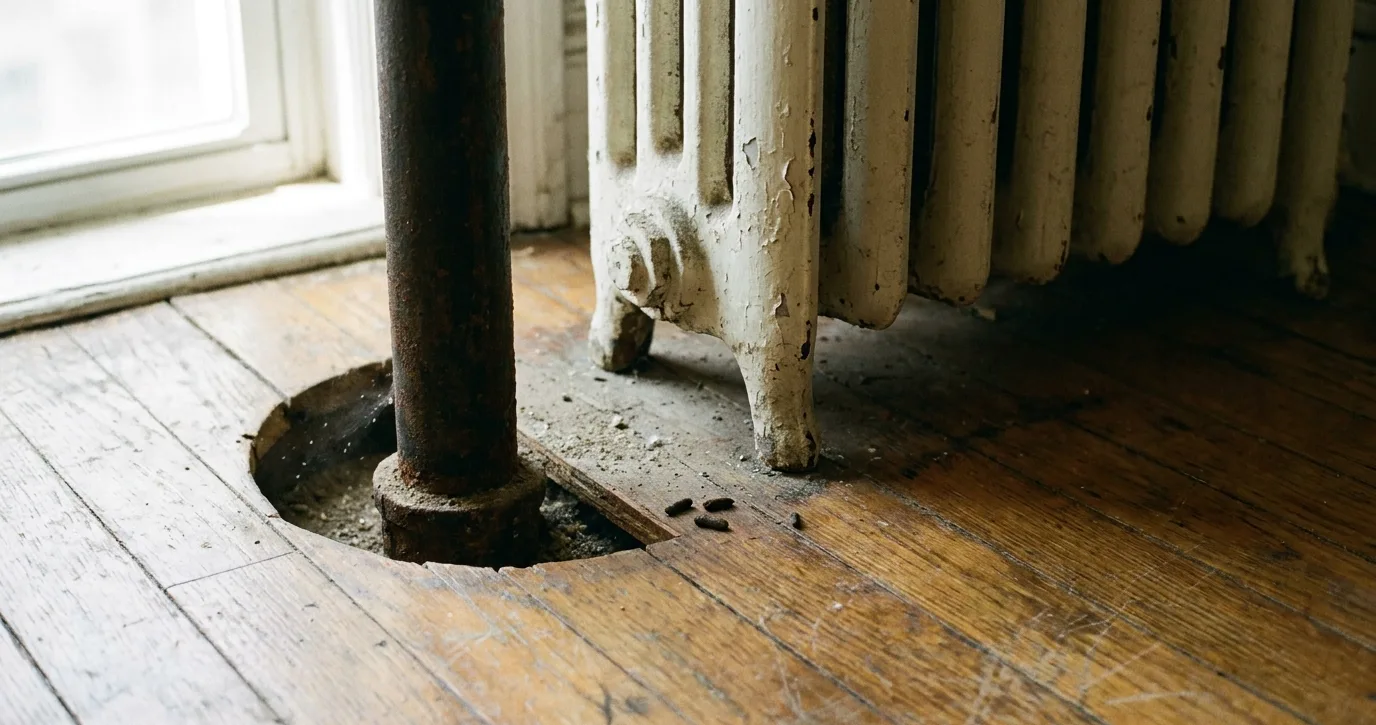
- Small, rice-sized droppings in drawers or behind the stove usually mean house mice. Start with mouse control.
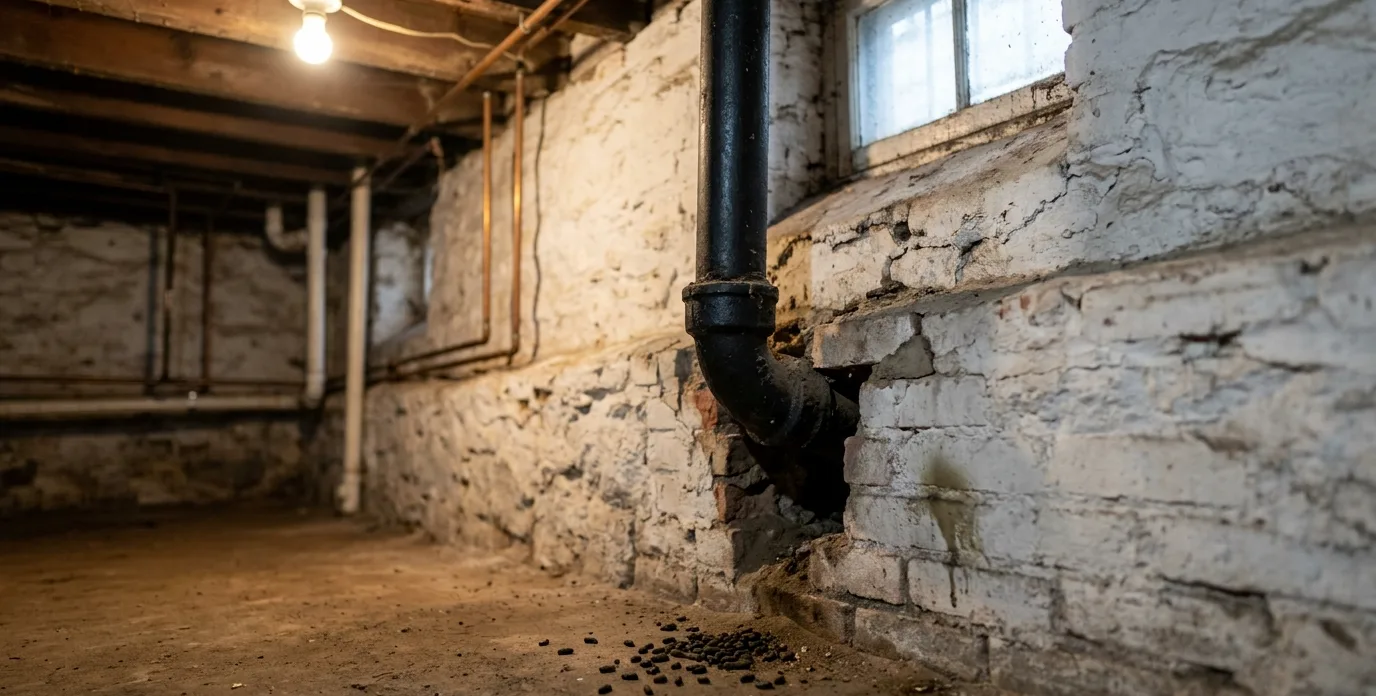
- Larger, blunt droppings in a basement, yard or trash area point to Norway rats. See rat control.
- Noise inside a wall or ceiling but nothing visible calls for a rodent inspection before anyone sets a trap.
- A kitchen, bar or food counter needs a written program, which is what our commercial rodent control covers.
Why rodents are a building problem here
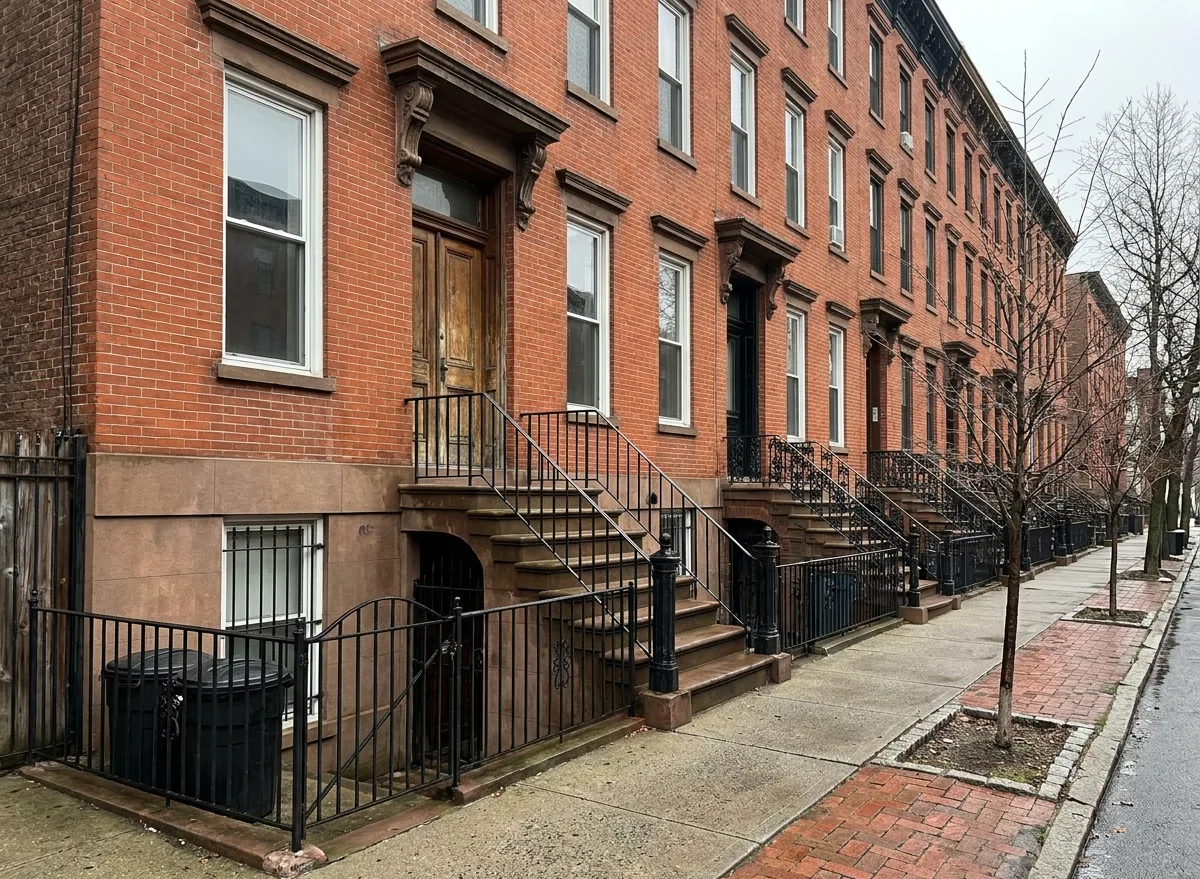
Hoboken packs roughly sixty thousand people into about a square mile, and a great deal of that housing is brick row houses from the late 1800s. Many were built as single-family homes and later split into three, four or six units. That history matters to a mouse. Every conversion added pipe runs, gas lines and cable drops through floors and party walls, and most of those holes were never closed tight.
The result is a building with hidden hallways. A mouse that enters through a gap at the garden level can reach the top floor without ever crossing open floor. Bait one unit and the colony shifts next door. That is why a single-apartment treatment so often comes back within a season, and why we ask about the whole building on the first call.
Outside, rats have their own advantages. Bagged trash goes to the curb on a schedule, rear yards back onto each other, and the city's older combined sewer lines carry both storm water and waste. Low blocks on the west side sit on what used to be marsh, and heavy rain still pushes water, and the rats living near it, up toward basements.
The two rodents you are dealing with
Norway rats
The brown rat is a ground-level animal. It digs burrows in yards, under stoops and along foundations, travels through sewers, and enters through gaps around pipes and broken drain covers. An adult can squeeze through an opening about the width of a quarter. Rats follow the same runways night after night, which leaves greasy rub marks along walls and makes them predictable once you know where to look.
House mice
Mice are climbers and they rarely need to go outside at all. A hole the size of a pencil eraser is enough, and the space behind a radiator pipe or under a dishwasher is plenty of room to nest. They eat little, so a few crumbs on a counter can feed several. In apartment buildings they are by far the more common call.
We do not treat for roof rats, deer mice or other species that turn up in rodent articles written for other parts of the country. They are not what lives in Hoboken buildings, and planning around them wastes your money.
Four steps from the first call to a closed-up building
You call and describe it
Where you hear it, when, what you have found and what kind of building you live in. A few minutes on the phone usually tells us which rodent and roughly where it is coming from.
We inspect the whole path
Basement, utility penetrations, kitchen and bath voids, the rear yard and the trash area. We are looking for entry points and runways, not only the room where you saw it.
We remove what is inside
Traps go where the runways are, out of reach of children and pets. We come back to check them, because removal is a process, not a single visit.
We seal and check again
Gaps get closed with materials rodents cannot chew through, such as metal mesh, sheet metal and mortar. A follow-up visit confirms no new activity.
There is more detail on each stage, and why the order matters, on our how it works page.
When rodents move indoors in Hoboken
Mouse calls climb sharply once nights turn cold in October and stay high through winter, when a heated wall cavity beats anything outdoors. Rat activity follows different triggers: construction that disturbs the ground, a restaurant changing how it stores garbage, and storms. After a hard rain, rats flushed out of low burrows and sewer lines go looking for higher, drier ground, which is often a basement. That is why calls from the low blocks of Southwest Hoboken rise in the days after a storm.
Summer is quieter indoors but not idle. Yards, tree pits and the edges of parks carry more rats in warm months, and a population that builds up outside in August is the one testing your foundation in November.
Rodent services for Hoboken homes and businesses
Every job uses some mix of the same seven services. Most homeowners need three or four of them; a restaurant may need all seven on a schedule.
- Rat Control
Norway rats burrowing under rear yards, stoops and cellars. We trace them back to the source, remove the ones inside and close the sewer-side gaps they keep using.
- Mouse Control
House mice travelling between units through party walls and pipe chases. We trap them out of your kitchen, then shut them out at every opening we can find.
- Rodent Inspection
A cellar-to-roofline look at your building that tells you what you have, where it gets in, how far it has spread and what it will take to stop it.
- Trapping & Removal
Traps placed on the runs rodents really use, checked on a schedule and cleared, so the animals leave the building instead of dying inside a wall.
- Exclusion & Sealing
Mesh, metal and mortar over the gaps that matter most in old brick: pipe penetrations, cleanouts, foundation cracks and old doors that never quite close.
- Attic Cleanup
Nesting and soiled insulation pulled out of the cockloft above the top floor, droppings removed from cabinets and cellars, and every surface disinfected once the rodents are gone.
- Commercial Rodent Control
Scheduled service and written logs for restaurants, delis, groceries and apartment buildings, where one mouse seen by the wrong person turns into a real problem.
What we do differently
- We start with the building, not the bait. Poison alone inside an occupied apartment tends to produce a dead animal in a wall and a smell for a week, while the gap that let it in stays open.
- We look past your front door. If the route runs through a shared basement or a neighbor's unit, we say so and explain what the landlord or condo board would need to allow.
- We explain the price before work starts. You get a written scope after the inspection, so you know what is being sealed and how many visits are planned. Our page on what rodent control costs explains what moves that number.
- We show you what we found. Photos of entry points and activity, so you are not taking our word for it.
Rodent control in every Hoboken neighborhood
The mile square is small, but conditions change fast from one end to the other. The bluff at Castle Point rarely floods; parts of the southwest flood in an ordinary thunderstorm. Uptown has some of the largest new buildings in the city, while the blocks near Church Square are almost entirely nineteenth-century brick.
- Downtown Hoboken, NJ
Walk-ups over restaurants and bars near the Terminal. Shared basements, busy kitchens and late-night curbside trash keep rats and mice active on these blocks year round.
- Uptown Hoboken, NJ
Brownstones, converted factory lofts and newer towers near Elysian Park. Each kind of building has its own weak points, so the work changes from one block to the next.
- Midtown Hoboken, NJ
Block after block of attached brownstones, where mice travel through party walls and old pipe holes from one house into the next, especially once the heat comes on.
- Southwest Hoboken, NJ
Low, flood-prone ground on old marshland. Heavy rain fills the combined sewer and pushes rats up into basements, drains and ground-floor units.
- Northwest Hoboken, NJ
Former warehouse land turned mid-rise housing near the light rail. Garages, trash rooms, ground-floor tenants and nearby construction all feed the problem.
- Castle Point, Hoboken
Historic homes, brownstones and student rentals on the high ground by Stevens. Fewer floods than the west side, but plenty of old gaps left by past renovations.
- Hoboken Waterfront, NJ
Condo towers along Sinatra Drive and the river walk. Most problems here start in the garage, the loading dock or the trash room, well below the apartments.
- Church Square, Hoboken
Tightly packed row houses around a busy park with a dog run and playground. Rats live in the planted beds outside; mice live in the shared walls inside.
Hoboken rodent control questions
Is it mice or rats in my apartment?
Droppings settle it fastest. Mouse droppings are pointed at both ends and barely a quarter inch long. Rat droppings are several times larger with blunt ends. Mice are far more common inside upper-floor units; rats usually show up at the garden level, in basements and around trash.
I rent. Who is responsible for rodent control?
In most rental buildings the landlord is responsible for keeping the structure clear of rodents and for repairing the gaps they use. We work with tenants, owners and property managers, and we write up what we find in plain language so everyone is looking at the same facts.
Will you use poison in my home?
Inside occupied living space we rely on traps, which let us confirm and remove every catch. Bait has a place in exterior stations and some commercial settings, and we will explain where and why before using any.
How long does it take to get rid of mice?
A mild problem in a single unit often quiets down within two to three weeks of trapping and sealing. Building-wide activity takes longer, because the work depends on access to shared spaces and neighboring units.
Do you work on the weekend?
Yes, Saturdays are regular working days for us. Call to find a time that fits your building's access.