
Who we work with
- Restaurants, bars and cafes along Washington Street and the side streets off it.
- Delis, bakeries and corner groceries with deliveries and storage in the cellar.
- Property managers and condo associations responsible for multi-unit buildings.
- Offices and retail spaces near Hoboken Terminal and the waterfront.
What food businesses are up against
New Jersey's retail food rules expect food establishments to keep rodents out and to show that they are doing so. A single dropping found on a prep shelf during an inspection is a problem, and word of a mouse in a dining room travels fast in a town this size.
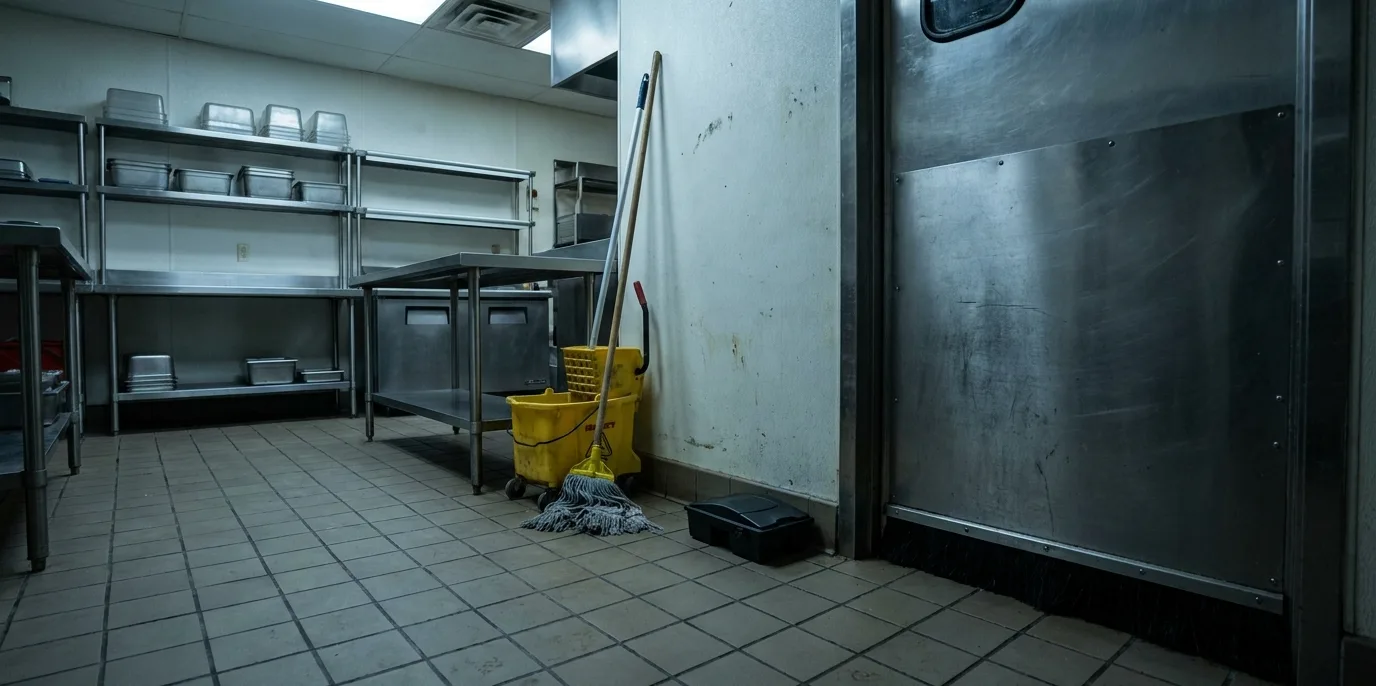
The buildings do not make it easy. Many kitchens sit in cellars or ground floors of old brick structures, connected to a combined sewer, receiving deliveries through open doors and storing trash at the curb or in a shared enclosure. Rats and mice have plenty of reasons to visit.
Trash, deliveries and the back door
Most commercial rodent trouble starts at three points: where garbage waits for pickup, where deliveries come in, and the door that gets propped open on a hot night. Bags set out early on the sidewalk feed rats for hours. A delivery door left open while boxes come down to the cellar is an open invitation.
None of those are unusual, and none of them can be ignored. We look at how your trash is stored and when it goes out, check every exterior door and suggest small changes that make the biggest difference.
Grease bins and recycling deserve the same attention. A bin with a cracked lid or a pile of flattened boxes against the back wall gives rats both food and shelter within a few feet of your door.
How a commercial program runs
Commercial work at Hoboken Rodent Control is built around a routine rather than a reaction. Each account starts with a full inspection, then settles into regular visits on a schedule that suits the business.
Baseline inspection
Cellar, kitchen, storage, dining area, trash area and the building exterior, with a written list of entry points.
Devices and stations
Traps inside, locked stations outside, numbered and mapped so anyone reading the log can find each one.
Scheduled service
Visits on a set interval to check devices, record activity and address anything new.
Records you can show
A service log with dates, findings and actions taken, kept on site for a health inspector or a landlord.
Sealing and sanitation recommendations
Devices only catch what gets in. The bigger gains come from closing gaps around drain lines, fixing door sweeps on delivery doors and sealing the cellar wall. We handle that through our exclusion service.
We also note sanitation issues that are feeding the problem: spilled grain under shelving, a broken lid on the grease bin, boxes stored against walls. We report them plainly so staff can fix them, without turning the log into a lecture.
Multifamily buildings
For property managers, the challenge is that rodents travel between units while complaints arrive one at a time. A building program covers the cellar, trash room, common hallways and the units reporting activity, so you are treating the building instead of chasing individual calls. We also keep tenants informed about when we will be in the building, which cuts down on access problems and repeat complaints. Buildings uptown, near the bar strip, often see more pressure from neighboring kitchens; see uptown Hoboken.
Late-night kitchens and bars
A bar that serves food until late has a short window between closing and opening when rodents have the place to themselves. Floor drains, the area under the bar and dry storage near the ice machine get extra attention on those accounts, and we time visits so the space can be checked while it is empty.
Commercial rodent control questions
Can you service us outside business hours?
Yes. We schedule around service so devices can be checked before opening or after closing.
Do you provide documentation for inspections?
Every visit is logged with the date, findings and actions, and the log stays on site.
How often should a restaurant be serviced?
It depends on the building and activity level. Most food businesses are on a monthly or more frequent schedule.
What happens if a customer sees a mouse?
Call us right away. We will come in, find where it came from and adjust the program so it does not happen again.
Can you work with our landlord on building repairs?
Yes. We will put the entry points in writing so the landlord knows exactly what needs fixing.